Introduction: As the colder months approach, it’s the perfect time to prepare your garden for a bountiful winter harvest of fresh vegetables in Pakistan. Sowing winter vegetable seeds requires some planning and care, but the rewards of homegrown produce are well worth the effort. In this guide, we’ll take you through the process of sowing winter vegetable seeds and help you create a thriving winter garden.
Selecting the Right Winter Vegetables:
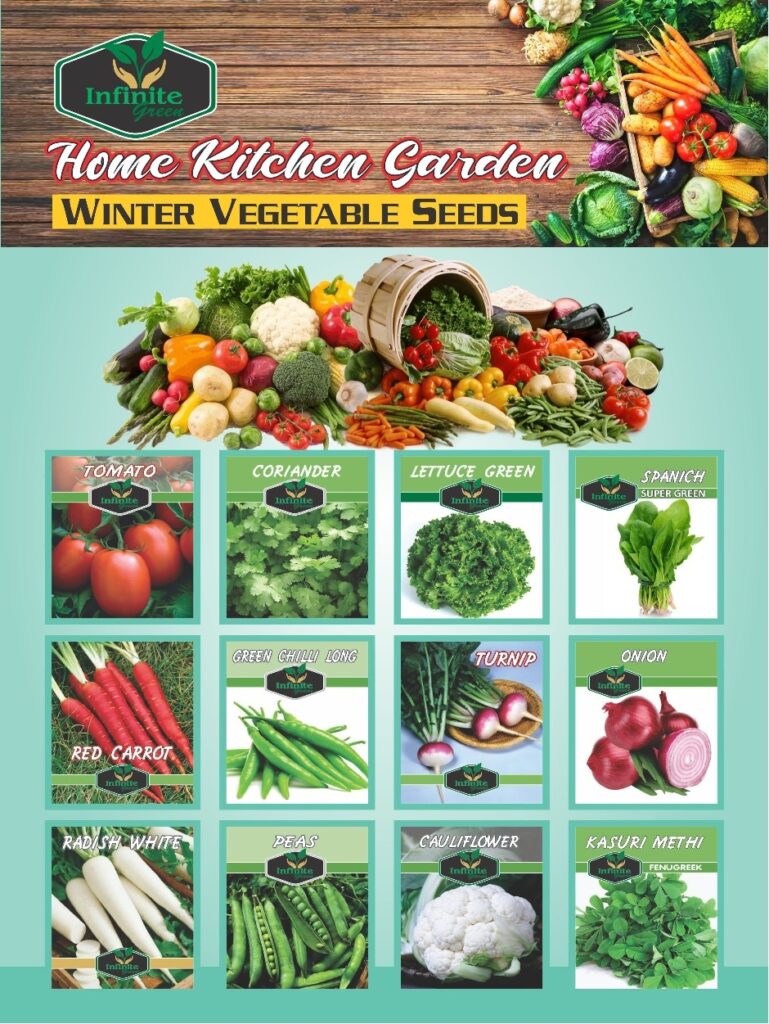
- Cold-Tolerant Varieties: Opt for vegetables that can withstand lower temperatures. Spinach, carrots, radishes, kale, and peas are excellent choices for winter sowing in Pakistan.
- Shorter Maturation Period: Choose varieties that have a relatively shorter time from seed to harvest. This ensures you can enjoy your homegrown vegetables sooner.
Preparing the Soil:
- Clearing the Garden Bed: Remove any weeds, debris, or old plants from the area where you plan to sow the seeds. This prevents competition and reduces the risk of pests and diseases.
- Soil Enrichment: Add compost or well-rotted manure to the soil to improve its structure and fertility. Winter vegetables benefit from nutrient-rich soil.
- Soil Testing: Consider getting a soil test to determine if any specific nutrients are lacking. Adjust the soil pH and nutrient levels accordingly.
Sowing Winter Vegetable Seeds:
- Seed Spacing: Follow the recommended spacing guidelines on the seed packets. Proper spacing ensures that the plants have enough room to grow and develop.
- Planting Depth: Sow the seeds at the appropriate depth, as specified on the seed packets. Generally, smaller seeds are planted shallower, while larger seeds go deeper.
- Watering After Planting: Gently water the planted area immediately after sowing the seeds. Use a fine mist or a watering can with a fine rose attachment to avoid displacing the seeds.
Providing Protection:
- Mulching: Apply a layer of organic mulch around the newly planted seeds. Mulch helps regulate soil temperature, retain moisture, and prevent weed growth.
- Covering: Consider using row covers or cloths to shield the young seedlings from extreme cold and frost. Remove the covers during sunny days to allow for air circulation and sunlight.
Caring for Seedlings:
- Watering: Keep the soil consistently moist, but avoid overwatering. Water early in the day so that excess moisture has a chance to evaporate.
- Thin Out Seedlings: Once the seedlings have sprouted and developed their first true leaves, thin them out if they are too close together. Proper spacing encourages healthy growth.
- Fertilization: Apply a balanced fertilizer to provide essential nutrients to the growing plants. Follow the manufacturer’s instructions for application.
Transplanting (If Needed):
- Harden Off: If you started your winter vegetable seeds indoors, gradually acclimate them to outdoor conditions before transplanting. Expose them to outdoor conditions for increasing periods over a week.
- Transplanting Time: If you plan to transplant seedlings, do so when they have grown sturdy enough and the weather is suitable. Avoid transplanting during extreme cold spells.
Conclusion: Sowing winter vegetable seeds in Pakistan requires careful planning and attention to detail, but the resulting harvest of fresh, homegrown produce is incredibly rewarding. By choosing the right vegetables, preparing the soil, providing protection, and offering proper care, you can ensure a successful winter garden that provides you with nutritious and delicious vegetables throughout the season. Follow these steps to create a thriving winter vegetable garden and enjoy the pleasures of homegrown goodness even during the colder months.