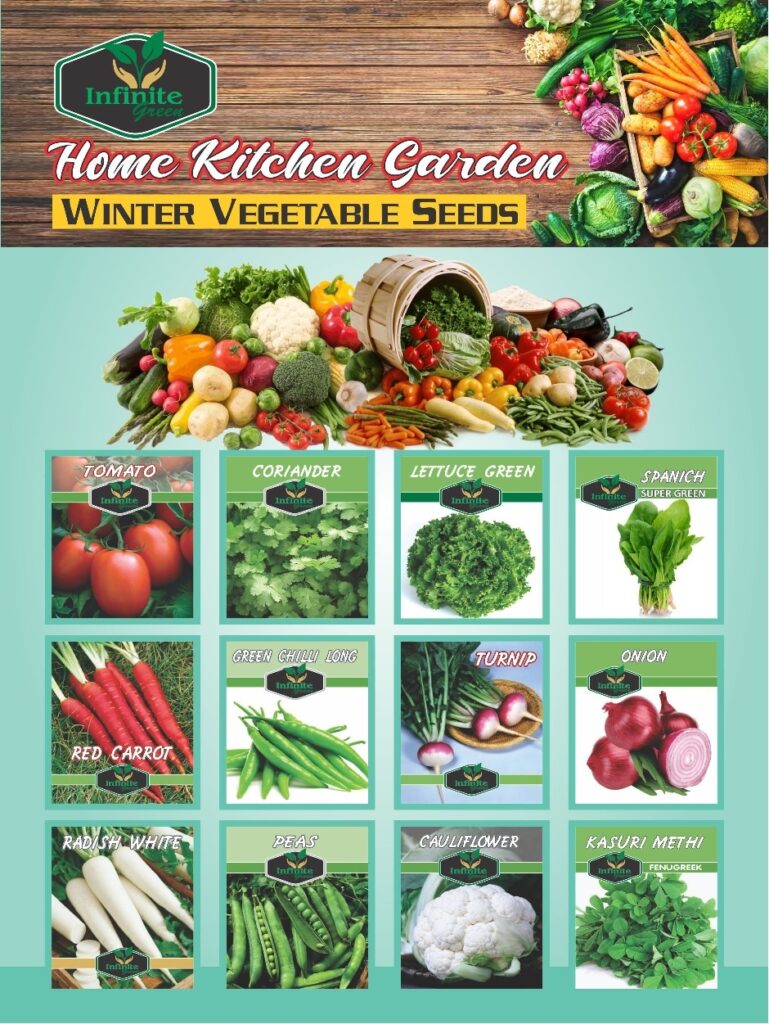
ThisPack Consist of 12 Different types Vegetables seeds mostly seeds.·
Following 12 type of Vegetables seeds included
1. Spinach. 150 Plus seeds.
2. GreenPepper. 150 Plus seeds.
3. Peas.15 Plus seeds.
4. Onion.60 Plus seeds.
5. KasuriMethi . 150 plus seeds.
6. Cauliflowers.25 Plus seeds.
7. RedCarrot. 150 plus seeds.
8. Turnip.100 Plus seeds.
9. White Reddish.70 Plus seeds.
10. LettuceGreen. 70 Plus seeds.
11. Tomato.30 Plus seeds.
12. Coriander.150 seeds.·
Fresh organic seeds.·
New Packing.·
Sowing Time Sep 15 to Dec 15 for best fruiting.

Preparing the Soil:
- Clear the Area: Remove any weeds, debris, or remnants of previous plants from the chosen planting area. This prevents competition and reduces the risk of pests and diseases.
- Soil Enrichment: Incorporate compost or well-rotted manure into the soil to enhance its fertility, structure, and water-holding capacity.
- Soil Moisture: Ensure that the soil is adequately moist before sowing the seeds. Water the area a day or two before planting to create a favorable environment for germination.
Sowing Summer Vegetable Seeds:
- Seed Depth: Refer to the seed packet instructions for the appropriate planting depth. Generally, smaller seeds are sown closer to the surface, while larger seeds are sown deeper.
- Seed Spacing: Follow the recommended spacing guidelines on the seed packets. Proper spacing allows each plant to receive sufficient sunlight, air circulation, and nutrients.
- Initial Watering: Gently water the planting area right after sowing the seeds. Use a fine mist or a gentle stream of water to avoid disturbing the seeds.
Protection and Care:
- Mulching: Apply a layer of organic mulch around the planted seeds. Mulch helps conserve soil moisture, regulate temperature, and suppress weed growth.
- Shade Protection: During the hottest part of the day, consider providing light shade to the newly sown area using shade cloth or improvised shading structures.
- Watering Routine: Water the seedlings in the early morning to prevent excessive water evaporation during the day. Water the base of the plants to minimize foliar diseases.
Thinning and Maintenance:
- Thinning Seedlings: Once the seedlings develop their first true leaves, thin them out if they’re too close together. This ensures that each plant has enough space to grow and receive sunlight.
- Fertilization: Apply a balanced liquid fertilizer according to the manufacturer’s instructions. Regular feeding provides essential nutrients for vigorous growth.
Transplanting (If Needed):
- Harden Off: If you started your summer vegetable seeds indoors, gradually acclimate the seedlings to outdoor conditions before transplanting them. Increase outdoor exposure gradually over a week.
- Transplant Timing: If you plan to transplant seedlings, do so when they’re strong enough and the weather is suitable. Avoid transplanting during heatwaves.
Conclusion: Sowing summer vegetable seeds in Pakistan opens the door to a rewarding and flavorful gardening experience. By selecting suitable vegetables, preparing the soil, providing protection, and offering diligent care, you can create a thriving summer garden that yields delicious homegrown produce. Follow these steps to establish a flourishing vegetable garden that thrives even in the hottest months, and enjoy the satisfaction of harvesting your very own fresh and nutritious vegetables.