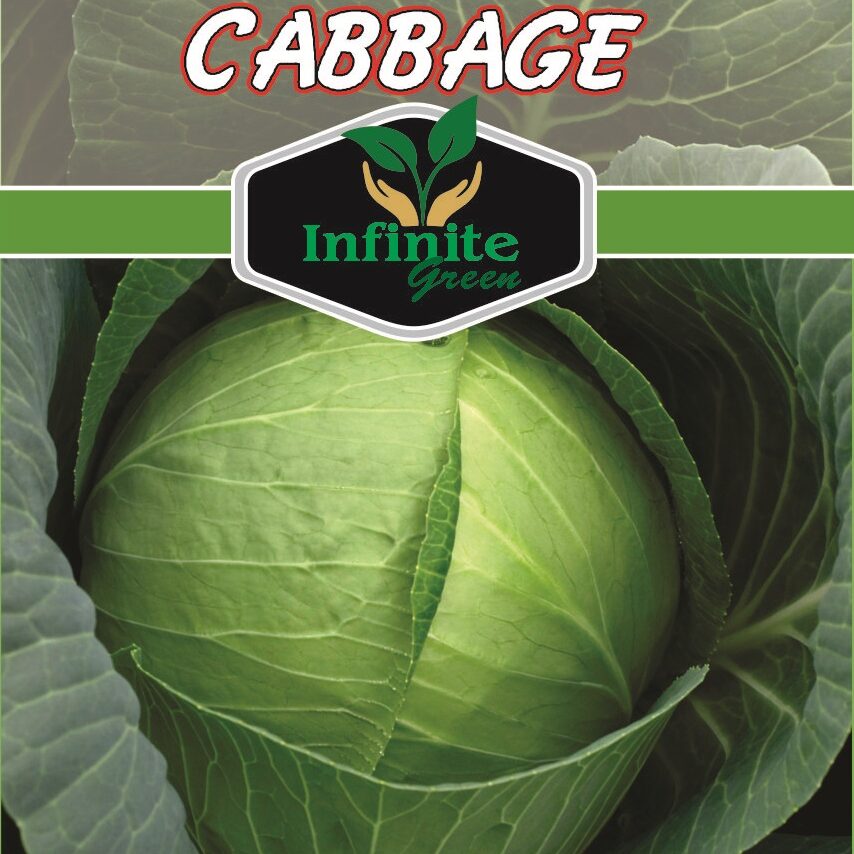
- seeds count approx. 25
1. Choose the Right Time: Cabbage is a cool-season crop, meaning it thrives in cooler temperatures. Start seeds indoors 6-8 weeks before the last expected frost date in your area or plant them directly outdoors in early spring for a spring harvest, or in late summer for a fall harvest.
2. Select a Suitable Location: Choose a spot that receives full sun (at least 6 hours of direct sunlight daily) and has well-draining soil. Cabbage prefers slightly acidic to neutral soil (pH 6.5-7.0).
3. Prepare the Soil: Work the soil to a depth of about 8-12 inches. Incorporate compost or well-rotted manure to improve soil fertility and structure. Avoid heavy clay soils, as they can lead to poor root development.
4. Planting:
- If starting indoors, sow seeds in seedling trays or pots. Transplant seedlings outdoors when they have 3-4 true leaves.
- If planting directly outdoors, sow seeds about 1/4 to 1/2 inch deep and 2-3 inches apart in rows that are 18-24 inches apart. Once they develop a few true leaves, thin the seedlings to about 12-18 inches apart.
5. Care:
- Water regularly to keep the soil consistently moist, but not waterlogged. Cabbage prefers even moisture.
- Mulch around the plants to help retain soil moisture and suppress weeds.
- Fertilize every 3-4 weeks with a balanced fertilizer, following the manufacturer’s instructions. Too much nitrogen can result in large, loose heads.
- Cabbage is susceptible to pests like cabbage worms and aphids. Use floating row covers to protect plants or consider using natural insecticides if needed.
6. Harvesting: Cabbage is ready to harvest when the heads feel firm and are of the desired size. Depending on the variety, this can take around 70 to 90 days from planting. Use a sharp knife to cut the head just above the base of the plant.

Reviews
There are no reviews yet.